The Best Shoes for Toe Drop Caused by Hereditary Spastic Paraplegia
Living with Hereditary Spastic Paraplegia means learning to adapt. After decades of falling, toe drop, and trial and error, I found that Doc Martens 1460 boots offered stability I never expected. This is my real world experience in hopes it helps someone else stay upright.

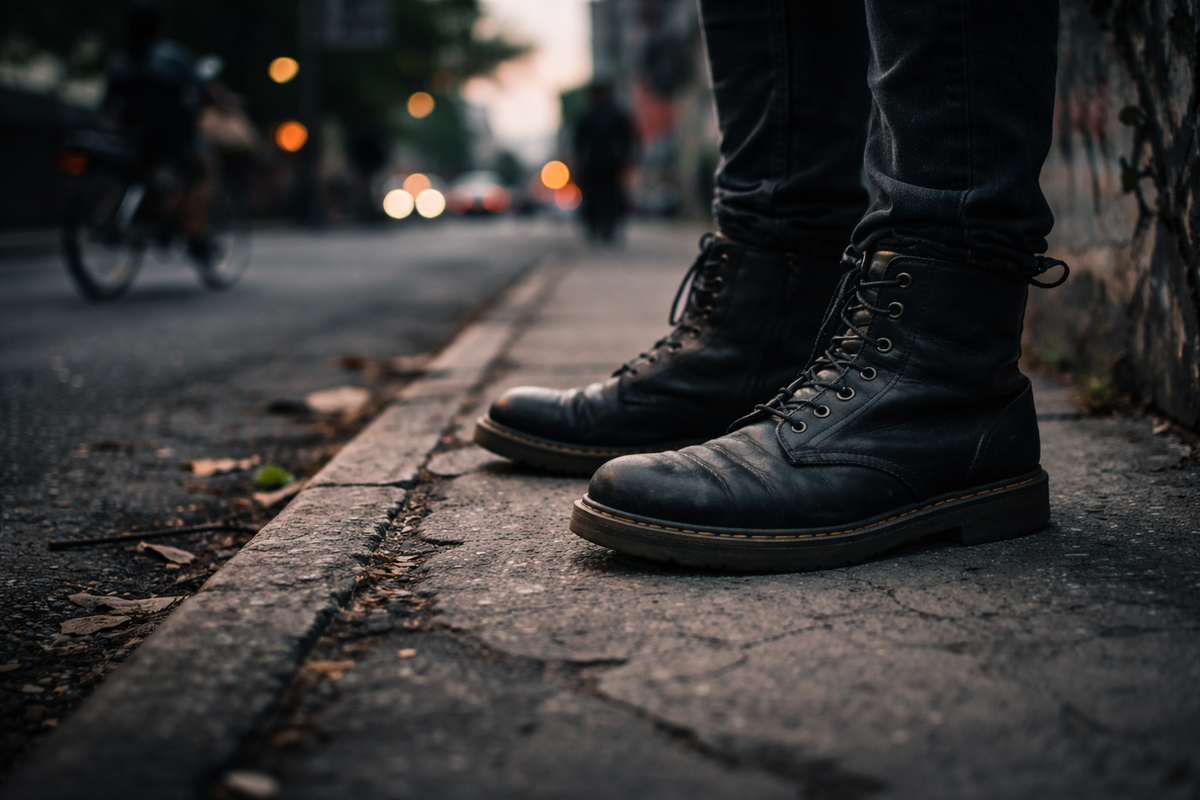
I have Hereditary Spastic Paraplegia. Saying it out loud still carries weight. HSP is not loud or obvious in the beginning. It creeps in. You trip a little more. You feel stiff when you stand up. You blame age, stress, old injuries. You tell yourself you just need to stretch more or slow down.
Then one day you realize walking has become work.
I am sharing this story because HSP can be deeply isolating. It is not widely understood. Even well meaning people struggle to grasp what it feels like to not trust your own legs. To scan every surface before you step. To quietly map exits and handholds everywhere you go. To fall in public and pretend you are fine when you are anything but.
If you live with HSP, you already know that independence is something you negotiate constantly. Shoes might seem like a small thing. They are not. For me, they became one of the few variables I could actually control.
What Hereditary Spastic Paraplegia Does to the Way We Walk
Hereditary Spastic Paraplegia is a group of inherited neurological disorders that primarily affect the motor pathways responsible for leg movement. Over time, communication between the brain and muscles degrades. The muscles tighten. Reflexes misfire. Movements become delayed or exaggerated.
The National Institute of Neurological Disorders and Stroke explains that HSP mainly affects the corticospinal tract, which plays a key role in voluntary movement
https://www.ninds.nih.gov/health-information/disorders/hereditary-spastic-paraplegia
In everyday life, this means walking stops being automatic. You cannot rely on muscle memory. Your gait becomes rigid, uneven, and unpredictable. You expend enormous mental energy just moving from point A to point B.
Falling Is Not Clumsiness It Is Neurology
Falls are one of the most demoralizing parts of HSP. They chip away at confidence. They make you second guess yourself. They invite judgment from people who do not understand.
It is important to say this clearly. Falling is not a character flaw. It is not laziness. It is not a lack of awareness. It is neurology.
Once you understand that, you can stop punishing yourself and start adapting intelligently.
Toe Drop and Foot Clearance Problems
Toe drop is a common and dangerous symptom of HSP. It occurs when the muscles that lift the front of the foot do not activate properly. Instead of clearing the ground during a step, the toes drag. They catch on carpet edges, cracks in sidewalks, thresholds, and stairs.
The Mayo Clinic notes that foot drop significantly increases fall risk and often requires mechanical solutions rather than strength training alone
https://www.mayoclinic.org/diseases-conditions/foot-drop/symptoms-causes/syc-20372628
Toe drop is exhausting. You are constantly compensating. Lifting your knees higher. Altering your stride. Overthinking every step. That compensation takes a toll on your hips, back, and mental health.
What Most Shoes Get Wrong for Toe Drop
Most shoes are designed for people with fully functional gait mechanics. They prioritize flexibility, lightness, and responsiveness. For someone with HSP, those same features can increase risk.
Flexible soles bend when they should resist. Soft uppers collapse instead of stabilizing. Lightweight designs exaggerate uncontrolled movement.
Shoes like that feel good in a store. They fail you in the real world.
What I Have Tried Sneakers Boots Cheap and Expensive
I have tried more shoes than I care to admit. Running shoes. Trail shoes. Hiking boots. Slip ons. High end orthopedic footwear. Budget options that promised support at a lower price point.
Some were comfortable but unstable. Others were stable but felt like I had given up on myself. Many were expensive mistakes.
Like a lot of people with HSP, I learned through bruises and close calls. Through frustration. Through the quiet anger of realizing that what works for most people does not work for me.
Why Comfort Alone Is Not Enough
Comfort is passive. Control is active. For neurological gait disorders, structure matters more than softness. Cushioning does not prevent toe drag. It hides it until you hit the ground.
I stopped asking whether a shoe felt good. I started asking whether it kept me upright.
Why Doc Martens 1460 Boots Became My Everyday Solution
The answer for me was not new. It was familiar.
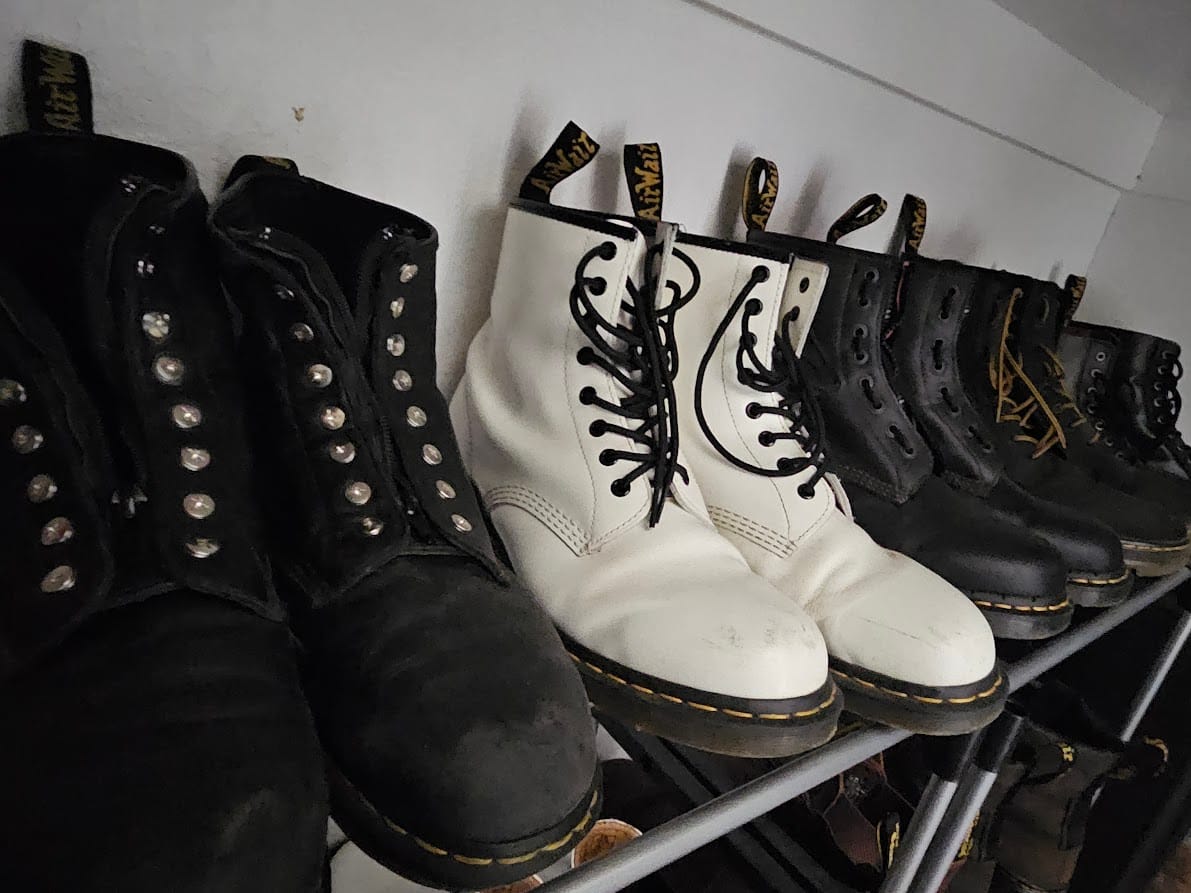
I have worn Doc Martens for over thirty years. Long before my diagnosis. Long before I had language for what was happening to my body. They were part of my identity, my generation, my uniform.
As my symptoms progressed, I noticed something important. On days I wore Docs, I fell less. I stumbled less. I felt more grounded.
That observation changed everything.
Ankle Support and Stability
The classic eight eyelet design provides meaningful ankle containment. Not rigid like a brace, but structured enough to reduce excessive movement. My foot stays aligned during the swing phase of walking. That alignment reduces missteps and unexpected turns.
Sole Structure and Toe Drag Reduction
The thick air cushioned sole is relatively stiff. It does not fold easily when my foot fails to lift properly. That resistance helps the foot clear the ground instead of catching on it.
This aligns with physical therapy guidance that recommends firm soles for managing foot drop
https://www.physio-pedia.com/Foot_Drop
Weight and Gait Control
This part surprises people. The weight helps.
Modern footwear worships lightness. For me, heavier boots slow my gait just enough to improve control. They encourage deliberate movement. They give my nervous system time to catch up.
Slower is not weaker. Slower is safer.
From Orthopedic Design to Cultural Icon
Doc Martens did not start as a fashion statement. Dr Klaus Martens developed the original boot after injuring his foot during World War Two. He wanted a sole that absorbed shock and reduced strain
https://www.drmartens.com/us/en/history
Workers adopted the boots first. Factory floors. Construction sites. Places where durability and support were essential.
The Boot That Refused to Behave
In the 1960s, Docs crossed into subculture. Skinheads. Punks. Later grunge and alternative scenes. They were embraced not because they were stylish, but because they were tough, affordable, and unapologetic.
By the time Gen X came along, Docs were already coded as resilience.
Why Gen X Never Let Go of Docs
For Gen X, Doc Martens were never precious. They were practical. They said you could take a hit and keep moving. Wearing them now does not feel like medical compliance. It feels like continuity. Like adapting without erasing who you are.
That emotional comfort matters. Shoes you identify with are shoes you will actually wear.
Why Docs Show Up in Other Neurological Communities
Doc Martens are not prescribed, but similar structured boots are frequently discussed in neurological communities.
The MS Trust emphasizes footwear structure for managing foot drop
https://mstrust.org.uk/a-z/foot-drop
Parkinsons organizations highlight stable soles and ankle support to reduce falls
https://www.parkinson.org/living-with-parkinsons/management/movement-symptoms/gait
Across conditions, the lesson is consistent. Footwear that combines structure, stability, and wearability makes a difference.
What Physical and Occupational Therapists Tend to Recommend
Therapists often recommend high top boots with firm soles for people who struggle with toe clearance and balance, especially when braces are not worn consistently. Real life matters. Identity matters. Adherence matters.
Footwear Features That Matter for Toe Drop and Spastic Gait
If Doc Martens are not right for you, look for function over branding:
- High ankle support
- Stiff sole with limited flex
- Enough weight to promote controlled movement
- Slip resistant outsole
- Secure lacing
- Proper fit with room for swelling or orthotics
Avoid minimalist and overly flexible designs. They work against neurological gait challenges.
You Are Not Weak You Are Adapting
Living with Hereditary Spastic Paraplegia requires constant adaptation. Choosing footwear that keeps you upright is not giving up. It is strategy. It is self respect.
You will still have hard days. You may still stumble. But fewer falls matter. Confidence matters. Dignity matters.
Important Disclaimer
I am not a doctor. I am not a physical therapist. I am not giving medical advice.
This is simply my personal experience with Hereditary Spastic Paraplegia and what has worked for me after years of trial and error. Everyone’s body is different. Everyone’s condition progresses differently.
Please talk to your doctor, physical therapist, or other qualified medical professional before making decisions about footwear or mobility aids. My hope is that sharing what has helped me might help someone else ask better questions or explore options they had not considered.